The Lead You Lost While You Were Asleep
Picture this. It's 11:40 PM. A business owner finds your website after a long day, comfortable enough to finally look for a solution. They have one specific question: "Can you integrate this with our existing system?"
There's a contact form. It asks for six fields and promises a reply "within 24 hours." They close the tab, open a competitor's site, and start a conversation there instead.
You never knew they existed. That's the quiet cost of a website that only works during office hours: the leads you lose are invisible. They don't show up in a report. They just never arrive.
Why Contact Forms Are Leaking Revenue
Forms made sense when the web was a brochure. Today, buyers expect answers in the moment. A form creates friction at exactly the wrong point:
- It demands commitment before value. Visitors must give their details before getting a single answer.
- It creates a waiting gap. Interest is highest when someone first lands. Every hour of delay cools it.
- It can't handle "quick questions." Many prospects only need one detail to decide, and a form is overkill for that.
- It sleeps when you sleep. If your audience spans time zones, your website is "closed" for a large part of the day.
What an AI Chatbot Actually Does for Sales
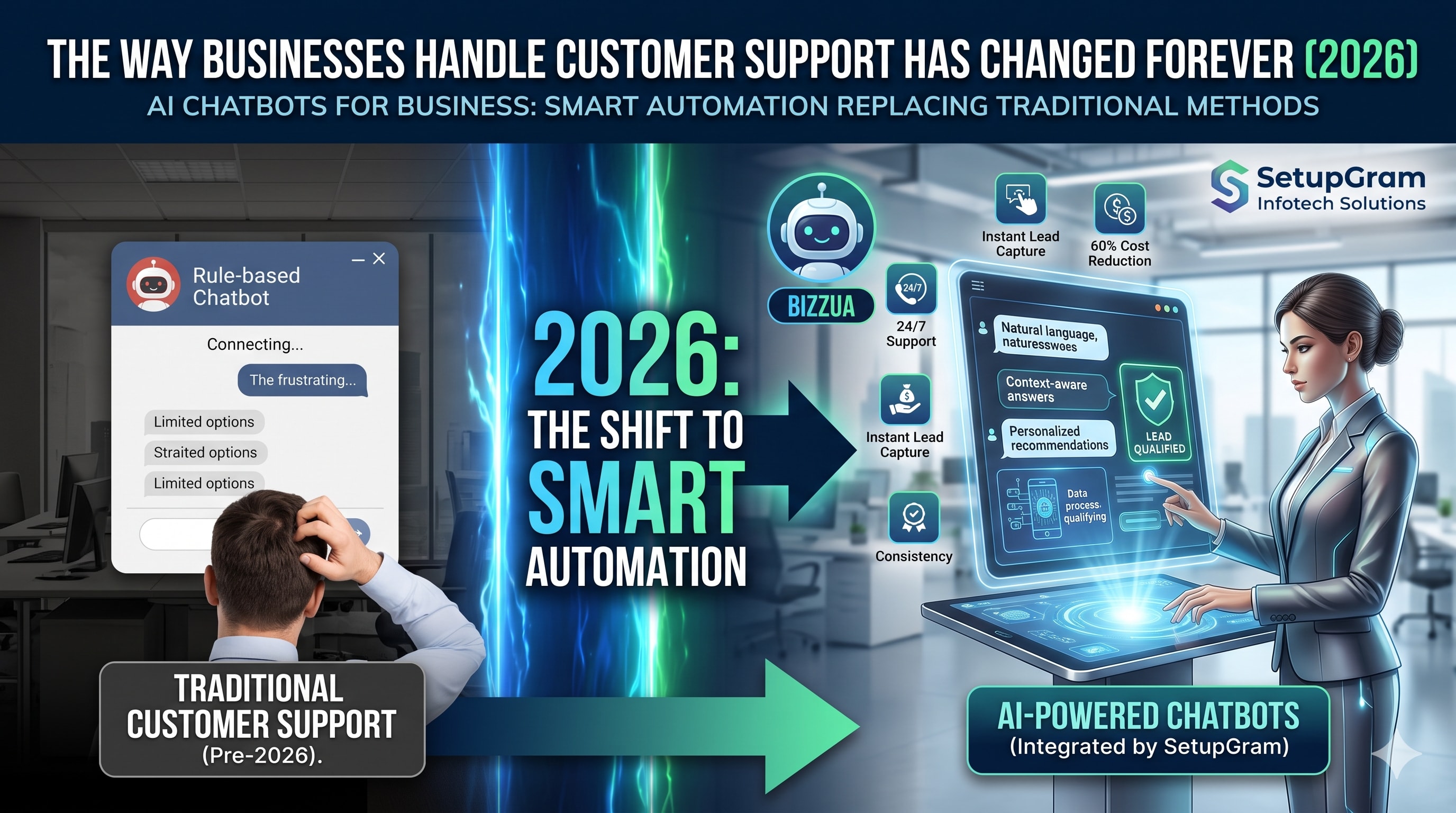
A modern AI chatbot is not the clunky, scripted widget you remember. It understands plain-language questions, answers from your real business information, and guides visitors toward the next step. In practice, it does four jobs your team can't do around the clock.
1. It answers instantly, at any hour
Pricing models, service details, timelines, and "do you work with businesses like mine?" questions get an immediate, consistent answer. The visitor stays engaged instead of drifting to a competitor.
2. It captures the lead naturally
Instead of a cold form, the chatbot collects a name, email, and project goals as part of a conversation. People share more when it feels like a chat than when it feels like paperwork.
3. It qualifies before your team ever replies
By asking about the service needed, the scale of the project, and the goal, the chatbot sorts serious buyers from casual browsers. Your team opens the inbox to context, not just a name and an email address.
4. It takes repetitive questions off your plate
Support teams spend a surprising share of their day answering the same handful of questions. Automating those frees your people for the work that actually needs a human: strategy, negotiation, and relationship building.
The goal isn't to replace your team. It's to make sure no good lead ever meets a closed door.
The Hidden Benefit: Better Data About What Customers Want
Every chat is a free piece of market research. Over time, you see which questions come up most, which services people ask about, and where visitors hesitate. That tells you what to put on your homepage, what to fix in your pricing explanation, and which campaigns deserve more budget.
It pairs especially well with paid traffic. If you're already investing in Google or Meta ads, a chatbot makes sure the visitors you paid for have something to talk to the moment they land, rather than a page they have to decode on their own.
A Practical Rollout Plan (Without the Overwhelm)
You don't need a six-month project to get started. A sensible approach looks like this:
- List your top 15 questions. Pull them from emails, calls, and DMs. These become the foundation of what the chatbot knows.
- Define the goal of the conversation. Is it booking a call, collecting a quote request, or qualifying a lead? Pick one primary action.
- Set clear boundaries. Decide what the bot should never do, such as guessing at custom pricing, and when it should hand off to a human.
- Connect it to your lead flow. Captured leads should land directly in your CRM or inbox so nothing falls through the cracks.
- Review conversations weekly. The first month of real chats is where the biggest improvements come from.
Common Mistakes to Avoid
- Making it pretend to be human. Be upfront that it's an AI assistant. Trust matters more than a clever illusion.
- Letting it answer everything. A focused chatbot that knows your business well beats a generic one that rambles.
- Setting it up and forgetting it. Offers, services, and pricing change. Your chatbot's knowledge should change with them.
- Hiding the human option. Always give visitors an easy way to reach a real person for complex or sensitive questions.
Is It Right for Your Business?
An AI chatbot tends to pay off fastest when you recognise a few of these signs:
- You get the same questions again and again.
- Your leads come from different time zones or arrive outside working hours.
- You spend real money driving traffic but few visitors convert.
- Your team is stretched thin responding to early-stage enquiries.
If two or more of those sound familiar, you're likely leaving money on the table every single day.
Where to Go From Here
The businesses that win online aren't always the best ones. They're often just the ones that answer first. A well-built AI chatbot makes sure that's you, at midnight, on weekends, and during every busy hour in between.
At SetupGram, AI chatbots are the heart of what we build, from custom integrations for existing websites and apps to full lead-capture flows connected to your CRM. If you'd like to explore what this could look like for your business, we'd be glad to talk it through. Start a conversation with our team, no obligation, and we'll map out a practical plan around your goals.